
Back pain is one of the leading causes of disability in the United States. On any given day, as much as 26% of the population struggles with lower back pain. Additionally, 80% of people will face this type of pain at some point. Thankfully, stretching can help relieve pain, improve mobility, and protect sufferers from future problems.
Learn more about common causes of low back pain and explore safe, effective techniques to help relieve it. Additionally, explore the ways daily movements can offer effective pain relief while taking advantage of posture tips and instructions for stretches that enhance flexibility.
Why Lower Back Stretches Matter
Stretching almost always feels good, doesn’t it? Many people stretch without even thinking about it, including when they get out of bed or stand up after sitting for long periods.
There’s a good reason for that. After remaining sedentary for a length of time or overexerting, muscles can become tight. When that happens, they shorten, become less pliable, and inhibit other muscles and joints from working properly. Some muscles, like hamstrings, can pull other body parts out of position. When that happens, it can cause pain and discomfort, not only in the affected area, but also in the lower back.
Stretches for lower back pain help combat all of that. A good stretching routine can be a particularly effective treatment strategy for patients with sedentary lifestyles or chronic tightness. It relieves muscle tension and increases blood flow and circulation, which can also lessen muscle pain and help prevent injuries.
Stretching offers a simple, low cost, accessible way to enjoy relief from low back pain both immediately and in the long term. Studies show that stretching can relieve low back pain, help patients regain more movement, and provide lasting results.
Common Causes of Lower Back Tightness
Controlling pain often starts with understanding the underlying causes. When patients seek pain management at OrthoNY, the first step is to determine the root cause. The team takes a holistic approach, using advanced diagnostic imaging when needed. After identifying the cause, care providers create a treatment plan to manage patients’ pain and get them moving normally again.
Since opening its doors in 2013, the OrthoNY team has treated patients for lower back issues, and some of the possible underlying causes might surprise you. For example, tight hip flexors and hamstrings are some of the most overlooked causes of lower back discomfort.
Let’s look at seven common causes in more detail.
Poor Posture
Your posture, which is the way you hold your body while sitting, standing, moving, and reclining, can contribute to spine health or take away from it. With poor posture, the strain on the spine doesn’t disperse normally. Slouching, walking slumped over, and lifting heavy things improperly can also lead to muscle strain, increased joint pressure, and harmful changes in blood flow.
Prolonged Sitting
Sitting for long periods can cause the hip flexors to shorten and become taut. These are the muscles that make it possible for people to lift their legs when walking or going knee-to-chest. Additionally, sitting for a long time can impact how the gluteal muscles perform and cause an unnatural tilt of the pelvis. This can lead to subconsciously relying more heavily on the hamstrings while moving, eventually causing strain.
Muscle Imbalances
Think of muscle imbalances as a set of dominoes. The imbalance may start at point A, but it can have a cascading effect. Muscle function, particularly those of the erector spinae and lumbar multifidus, two of the main back muscles, is among the chief causes to consider. When these muscles don’t relax and contract normally, it can strain the surrounding muscles, tendons, and connective tissues.
Lack of Core Strength
There’s a reason so many health professionals stress the importance of developing a strong core. This group of muscles, which wrap around the trunk of the body, acts as its main source of stabilization. Core muscles all work together to help people move comfortably while protecting the spine. When someone’s core is weak, it puts them at an increased risk of developing low back pain, hip pain, abdominal strains, and more.
Tight Hip Flexors
Hip flexors consist of a group of three muscles that start in front of the pelvis. They go across the hip, in front of the spine, and then attach to the inner thigh. These are the muscles that allow the hips to move and add stability to the upper body while walking and doing other weight-bearing movements.
Tightness in these muscles, commonly caused by sitting for long periods, can interfere with the body’s natural movements. As a result, other body muscles, including the lower back muscles, work harder to compensate.
Taut Hamstrings
The hamstrings are located at the back of the thighs. These muscles engage while walking, running, and jumping. When they are tight, it pulls on an area of the pubic bone known as the ischial tuberosities. In response, it shifts the tilt of the pelvis and can strain muscles in the lower back.
Warm-Up Before Stretching
Warming up before any exercise session can help optimize results and reduce the chance of strain or injury. Gentle motion helps expand blood vessels, delivering more oxygen to all muscles in the body. It also increases muscle temperature, which enhances both efficiency and flexibility.
Although many people use stretches as part of their warm-up routines, it’s important to spend five to ten minutes warming the muscles up in more substantial ways. For instance, you might consider taking a 10-minute, low-intensity walk. This can help increase your breathing and heart rate while boosting circulation to muscles, preparing them for the stretch ahead.
Pelvic tilts can help engage core muscles. To perform them, lie flat on the floor and bend your knees. Inhale and then as you exhale, use your abdominal muscles to flatten your back against the floor while tilting your pelvis up toward your naval. Hold the position for 10 seconds, gently release it, and repeat the movement 10 to 15 times.
Planks can be helpful in warming up the back and core muscles. Start in a push-up position, either on your toes or on your knees if you’re just beginning. Keep palms flat on the floor. Straighten your back, tighten your abdominals, and keep your head in a neutral position. Hold it for 30 to 60 seconds before gently releasing the plank.
Effective Lower Back Stretches
After warming up, it’s time to begin. Hold each stretch for 20 to 30 seconds, breathing deeply before moving to the next. The following stretches can offer an excellent starting point. Additionally, the physical therapy services at OrthoNY can offer more options and a plan customized to suit each patient’s needs.
Let’s examine each stretch with step-by-step instructions.
Child’s Pose to Gently Lengthen the Spine

- Lower your body to the floor and kneel, keeping your knees hip-width apart and your big toes touching.
- Drop your buttocks toward your heels, sitting back on your feet while reaching your arms forward.
- Rest your forehead on the floor and hold the pose, breathing deeply for 20 to 30 seconds before returning to a neutral position.
Knee-to-Chest Stretch to Reduce Tension in the Lumbar Region
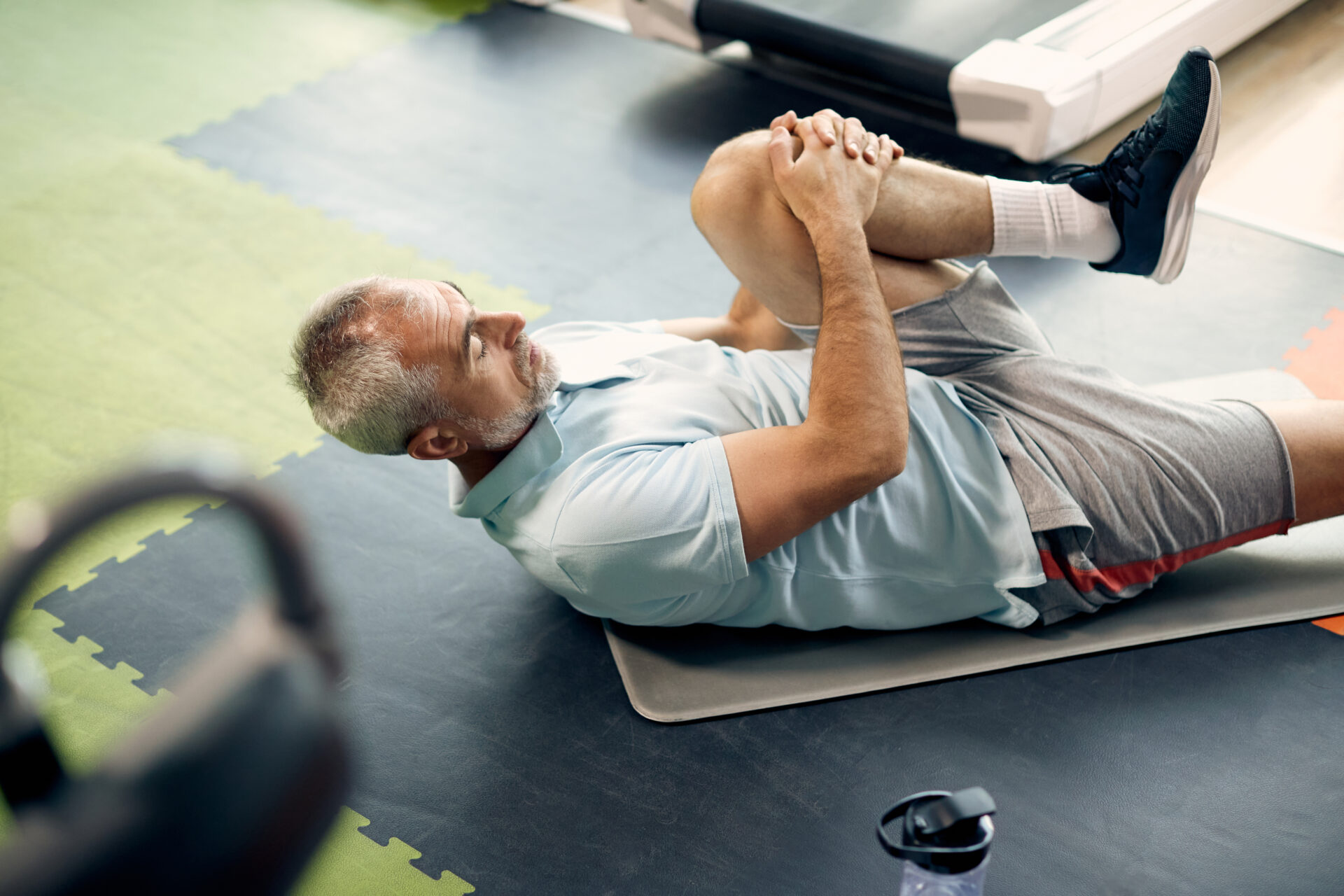
- Lie on your back on the floor, keeping your feet flat against the floor and your knees bent.
- Bring your left knee up toward your chest, guiding it with both hands.
- Hold one knee as close to your chest as you comfortably can, pressing your back to the floor.
- Breathe into the stretch, holding it for 20 to 30 seconds before returning to the neutral position.
- Repeat with the other knee.
- For a deeper stretch or modification for comfort, keep the opposite leg straight instead of bending the knee.
Cat-Cow Movement for Improved Spinal Mobility
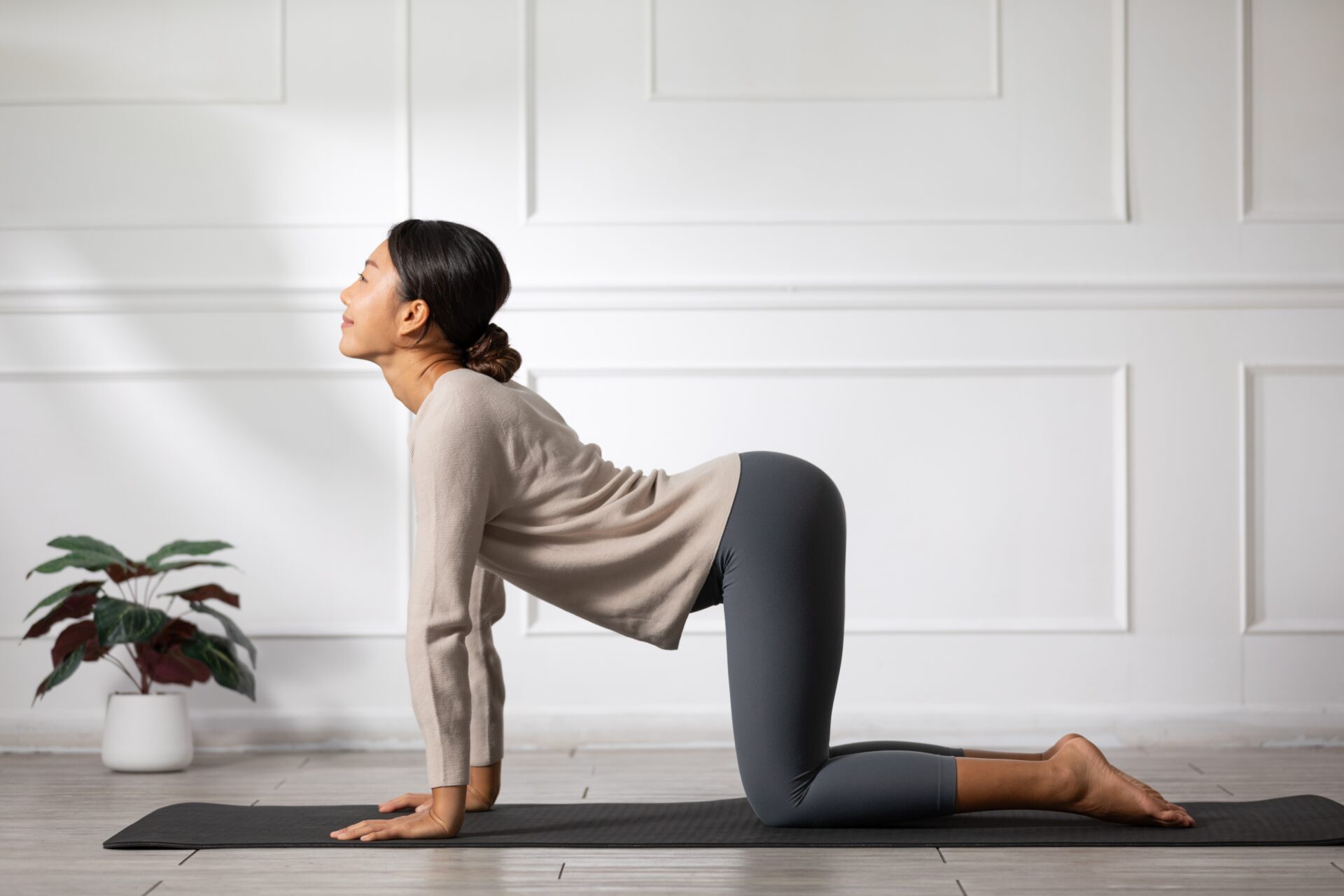
- Get down on your hands and knees on the floor, placing your hands shoulder-width apart.
- Inhale deeply, lifting your head and extending your abdomen toward the floor.
- Exhale, arching your back slightly into the cow pose.
- As you inhale, reverse the movement to raise your spine toward the ceiling and lower your head and neck into the cat pose.
H3: Seated Spinal Twist to Improve Flexibility and Posture
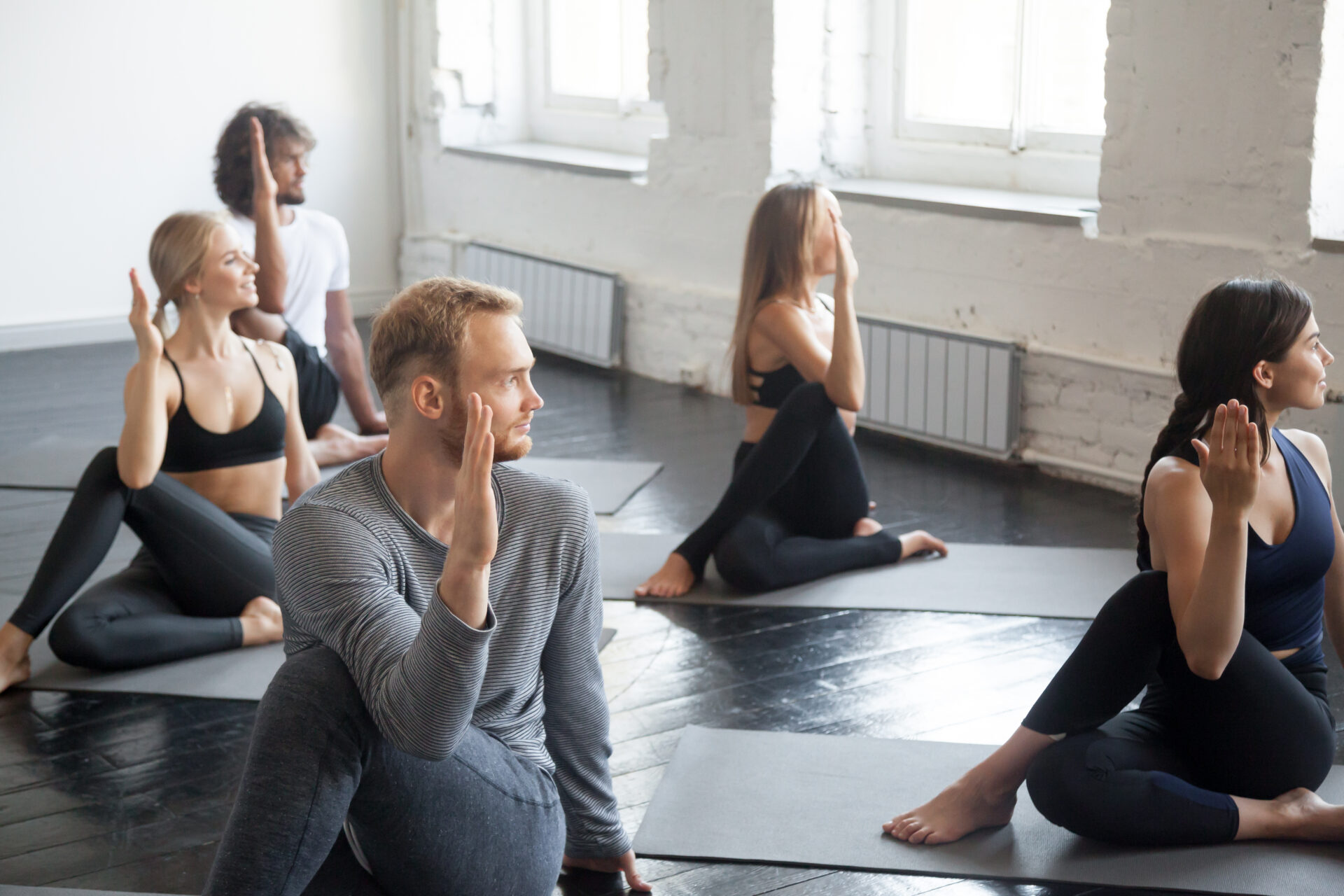
- Sit on the floor with your legs straight out in front of you and your back straight.
- Place your arms on the floor behind you with your fingers facing away from your body.
- Move your right foot so it is flat on the floor on the outside of your left knee.
- Inhale deeply, bringing the left arm up and placing the elbow on the outside of your right leg as you exhale.
- Turn from your torso, moving your chest, head, and gaze to the right.
- Hold the pose for 30 seconds before returning to a neutral position.
- Repeat on the opposite side.
Standing Hamstring Stretch to Ease Tension Pulling on the Lower Back

- Stand in a comfortable position with one leg extended out and the back straight.
- Bend at the hips, moving your chest toward your thighs while keeping the extended leg straight. The opposite leg can bend at the knee as needed.
- Breathe deeply as you continue down toward your chest as far as you can comfortably go, holding onto a wall or nearby furniture for support, if necessary.
- Hold the stretch for 20 to 30 seconds before switching to the opposite leg.
- Modify the stretch if needed by placing the extended leg on a curb or elevated surface.
Walking and Flexibility Exercises
Walking works synergistically with stretching to help improve flexibility and decrease discomfort. Walking is a low-impact, dynamic movement that engages multiple muscle groups and helps practice balance. The movement also activates spine-supporting muscles, helping to increase the flow of oxygen and decrease inflammation without adding extra pressure on discs and joints. Additionally, over time, walking strengthens muscles and helps keep the spine relaxed, ultimately supporting long-term back health.
Patients can also try a combination of walking stretching exercises. For example, during a walk, you could stop for a moment, put your feet shoulder-width apart, bend slightly, and place your hands on your knees. Keeping your feet flat on the ground, inhale deeply, and turn your torso to one side. Hold for a moment, inhale, and return to center. Repeat on the other side to stretch the mid- and lower back before restarting your walk.
When to Seek Medical Help
Stretching can be one of several effective at-home treatment options for back and neck pain. However, the following red flags indicate the need for medical care:
- Pain that does not go away for two weeks or longer
- Intense or constant pain
- Pain that radiates down one or both legs
- Feeling numbness or tingling
- Lower back pain accompanied by shooting pains into other areas
- Changes to bowel or bladder habits
- Pain accompanied by unexplained weight loss or fever
- Sudden changes to the skin on the back
- Pain occurring after a fall or injury
Patients with one or more red flags should consider scheduling an appointment with a spine or pain management specialist at OrthoNY. Call for 24/7 scheduling or make an appointment online to address lower back pain and begin feeling relief today.
Frequently Asked Questions
How often should I stretch my lower back?
Although each patient has unique needs, most can practice stretching their lower backs one to three times daily. However, anyone who feels increasing soreness may want to scale back and start slowly. They can consider practicing every other day and working their way up to stretching more often. If lower back pain worsens, consider making an appointment with OrthoNY to get additional guidance.
Can stretching alone fix lower back pain?
Studies suggest that after four weeks of stretching, patients’ pain level improved by 58%, on average. Still, stretching alone may not be a complete cure. Lower back pain can have multiple causes, including irregular movement patterns and arthritis or degeneration of the spine. Working with the professionals at OrthoNY can help uncover the root cause and ensure patients follow an effective treatment plan.
Are standing stretches good for lower back pain?
Yes, standing stretches can be helpful. For example, knee hugs can stretch multiple muscle groups at once, including the lower back, hip flexors, and hamstrings. Step forward and raise one knee as high as you can comfortably. Gently support it with both hands, standing up tall and using your core muscles to stabilize. Repeat, alternating sides for 60 seconds.
Should I stretch if my back hurts?
Yes, light activity, including stretching, can be beneficial when back pain surfaces. If it’s sudden or new, it could be a sign of an injury or a more serious underlying cause. Contacting the OrthoNY team can lead to more comprehensive solutions.
What’s the best time of day to stretch your lower back?
Morning and evening are ideal times to stretch. In the morning, stretching can alleviate tension or stiffness caused by lying in bed for extended lengths of time. Evening stretches promote relaxation and increase blood flow to the muscles.
When should I see a doctor instead of stretching?
In many cases, patients’ lower back pain begins to improve within a few days. Contact a doctor if the pain worsens in some positions, travels to other areas, or is accompanied by numbness or tingling. Likewise, if it lasts for more than two weeks, contact OrthoNY to rule out more serious causes.